
Mouthguard care after every use
Rinse the guard in cold water as soon as you take it out. Brush every surface with a soft toothbrush and mild liquid soap, including the grooves where your teeth sit, then rinse off all the soap.
Let it air dry completely before it goes in the case, and rinse it again before you put it in your mouth. Keep a separate soft brush for the guard.
What kills bacteria on a mouthguard?
A good scrub removes the most. In a 2025 Australian study of the guards and cases of ten under-12 AFL players, brushing with toothpaste removed about 98% of bacteria, alcohol and hydrogen peroxide mouthwashes removed 86 to 88%, and a rinse in cold or warm water removed 60 to 70%. Most of the bacteria came from handling and storage, not from the players' own mouths.
The same study found worn, rough surfaces held about eight times as much bacteria as new ones, and guards had turned rough after one season. So we recommend a scrub with mild soap, not toothpaste: toothpaste is abrasive, and scratches give bacteria somewhere to sit. Replace a guard once it turns rough, cracked or loose.
What can you clean a mouthguard with?
Clean it with mild liquid soap, cold water and a soft brush, and soak it in a denture cleaning tablet once or twice a week.
| Use it? | Why | |
|---|---|---|
| Mild liquid soap | Yes, after every use | A brush and soap lift bacteria without scratching the surface |
| Toothpaste | No | It is abrasive and scratches the surface |
| Denture cleaning tablets | Yes, as a weekly soak | One of the most effective cleaners in the 2025 study; brush as well |
| Hydrogen peroxide mouthwash | Not instead of brushing | Removed less bacteria than brushing in the same study |
| Alcohol mouthwash | Don't soak it | Alcohol can wear down the guard material |
A weekly soak
Once or twice a week, or when you notice build-up or a smell, soak the guard in a denture cleaning tablet or a mouthguard cleaner. Follow the product's soaking time, then rinse it well.
A soak adds to brushing and doesn't replace it.
Avoid bleach and harsh chemicals. If you are unsure whether a product suits your guard, ask us.
Why does my mouthguard smell or go yellow?
A mouthguard smells when bacteria, saliva and food build up on it, and a guard put away wet in a closed case gets worse. A worn, rough surface holds more of that build-up and is harder to clean.
Brush it with mild soap, give it a soak, and let it dry fully before it goes in the case. If a smell or a yellow stain stays after that, or the surface feels rough, replace the guard.
How should I handle it at training and games?
Handle it as little as you can: keep it in your mouth or in its case, not in a pocket, a sock or on the bench. Most bacteria on junior guards in the 2025 study came from handling and storage.
If it drops or passes through dirty hands, rinse it before it goes back in, and clean it properly when you get home.
Keep it away from heat
Hot water, boiling, direct sun and a hot car can warp a guard and change its fit. Never try to reshape a custom guard at home.
Which case should I keep it in?
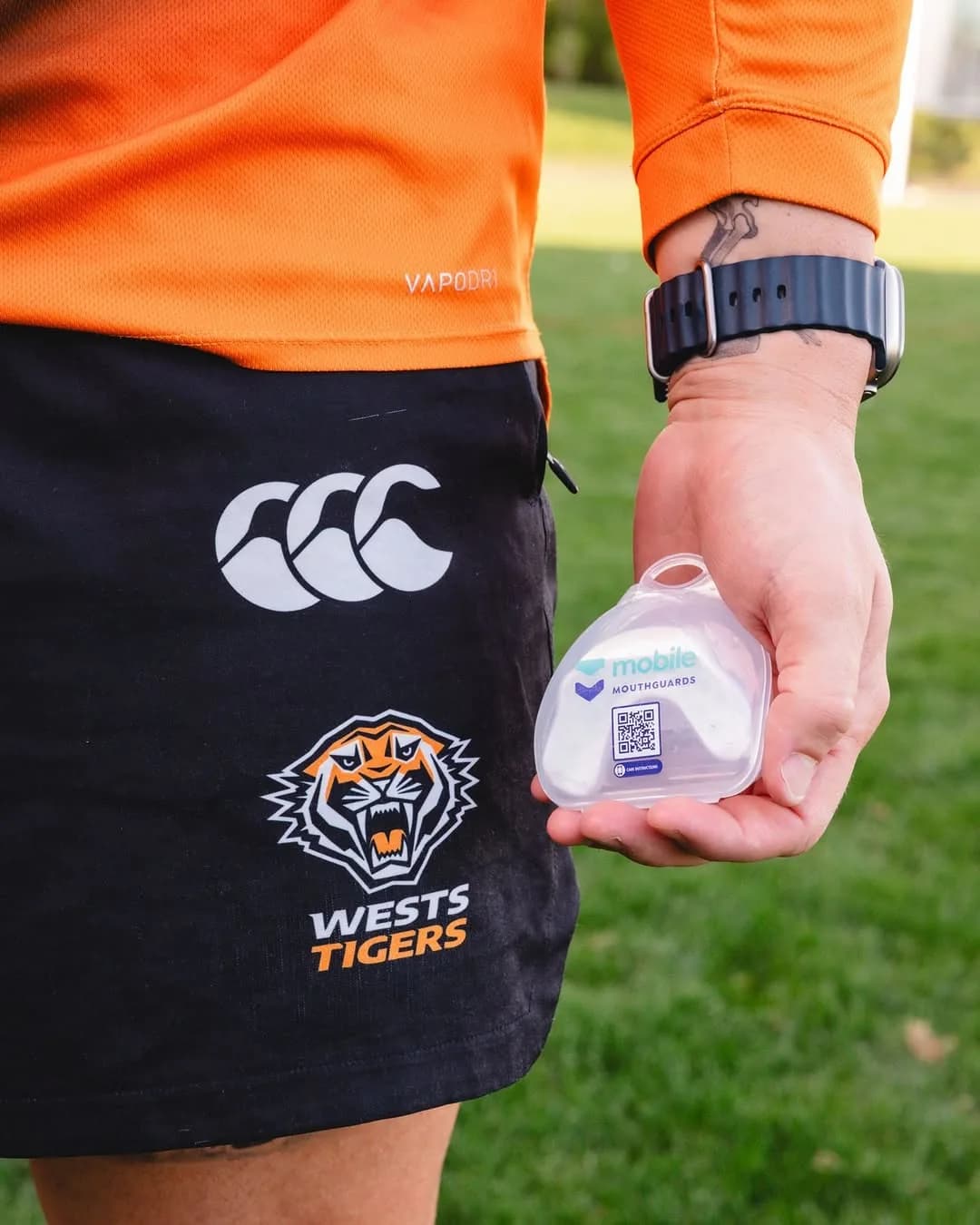
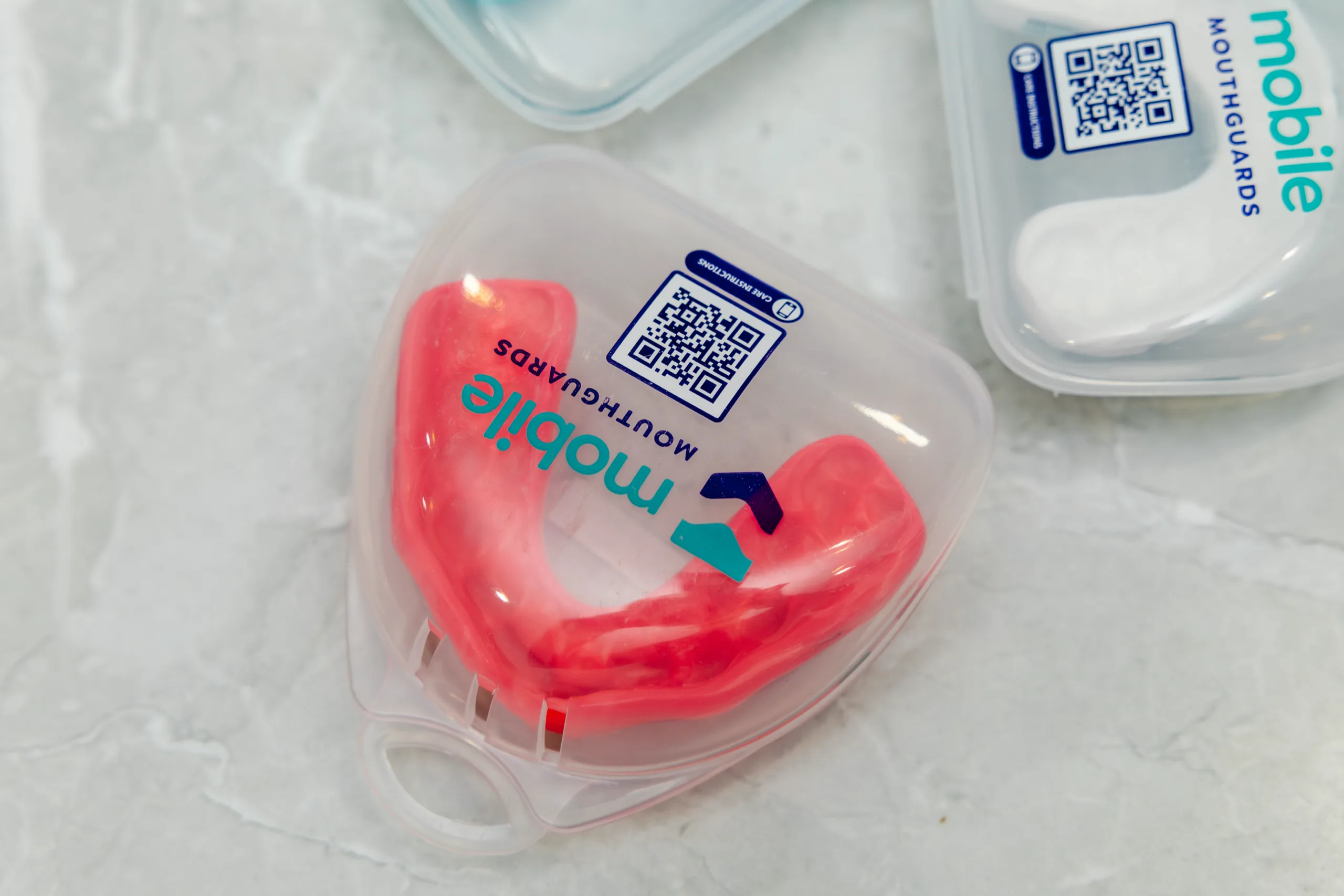
Keep the dry guard in a rigid case with air holes, so it can't be crushed and air can reach it. An airtight container traps moisture.
Clean the case too. In the 2025 study, bacteria from the cases formed the strongest biofilms of any samples, so wash it regularly with mild detergent and let it dry. Put your name on the guard and the case, and keep both out of reach of pets.
Don't share your guard, and don't chew on it.

Mouthguard maintenance: check it before each session
Look for cracks, tears, holes and thin spots, and check it still sits firmly on your teeth. A damaged or loose guard needs replacing, even if it is new.